
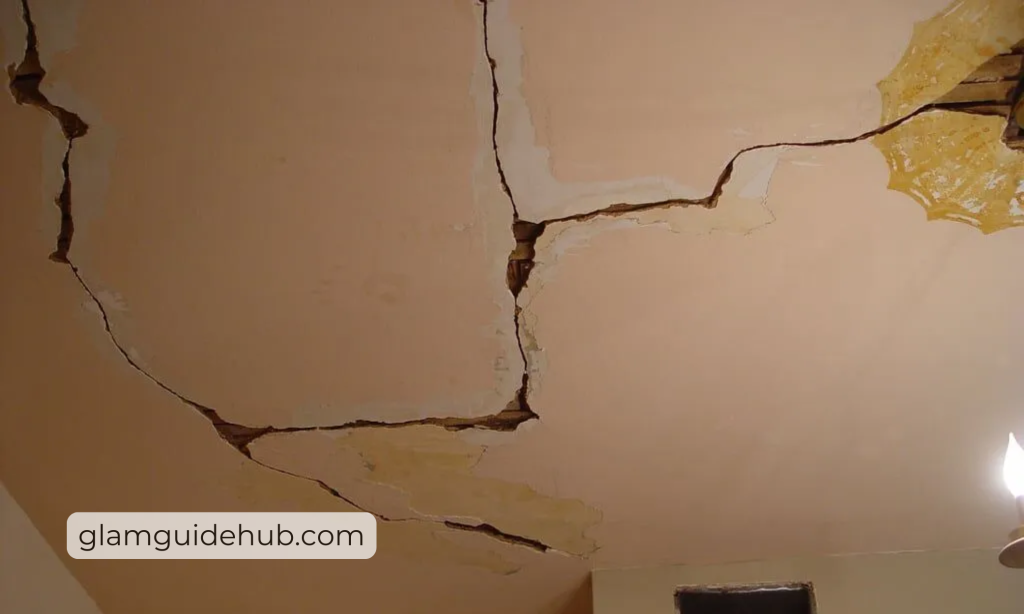
Are you spotting some cracks on your ceiling and feeling a bit concerned? Well, you’re not alone. Cracks in the ceiling can be a common household issue, but figuring out when to worry is a challenge.
Firstly, it’s important to note that not all ceiling cracks are an indication of structural problems. Small, thin cracks are often a result of normal house settling and can be easily rectified with some patchwork and paint. These minor imperfections can be due to changes in temperature, humidity, or even the age of the house.

Common Causes of Ceiling Cracks: Understanding the Factors Behind Cracks in Your Ceiling
⦁ Factors to consider for property evaluation:
⦁ Property age
⦁ Moisture-related damage
⦁ Structural integrity
⦁ Drywall concerns
⦁ Quality of artistry
Types of Ceiling Cracks: Identifying and Assessing the Cracks in Your Ceiling
There are several types of ceiling cracks that homeowners might come across, each with different implications:
⦁ Hairline cracks: Hairline cracks are thin cracks that often occur as a result of normal house settling. These minor cracks are generally harmless to the structural integrity of your home.
⦁ Spiderweb cracks: Spiderweb cracks, resembling a spider’s web, can be caused by normal settling or indicate more significant issues like foundation shifts. It’s essential to monitor these cracks and seek professional advice if they expand or multiply.
⦁ Straight-line cracks: Typically found at the junction where two pieces of drywall meet, straight-line cracks usually indicate a taping problem at the seams of the drywall rather than a structural issue.
⦁ Giant, jagged, or diagonal cracks: Large, jagged, or diagonal cracks may indicate significant structural stress in your home. It is highly recommended to consult with a construction professional immediately.
Being familiar with these common types of ceiling cracks can help you identify potential issues and address them effectively. However, if you’re ever in doubt, it’s always best to seek the advice of a professional.
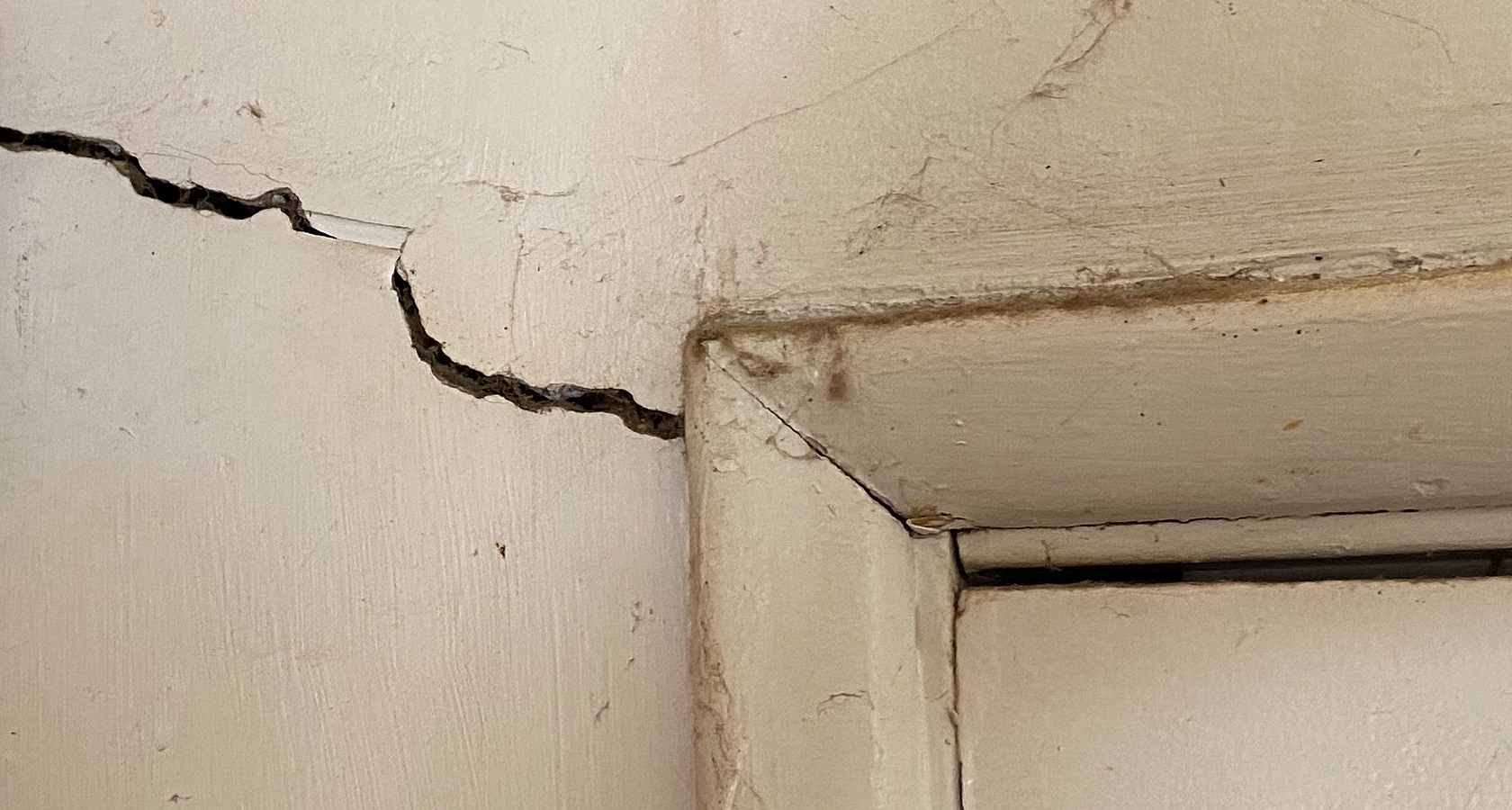
When is it necessary to contact a structural surveyor? Find out the ideal situations to call for a structural surveyor’s expertise.
Knowing when to call a structural surveyor is important for assuring the safety and longevity of your home. While minor hairline cracks are usually not concerning, there are situations where expert assessment is necessary. Spiderweb cracks that expand or multiply may indicate a significant foundation shift, requiring immediate professional attention. Straight-line cracks that reappear after repair may suggest an underlying drywall issue and warrant a surveyor’s insight. However, the most urgent reason to involve a structural surveyor is the presence of large, jagged, or diagonal cracks, which could compromise your home’s safety. Remember, it’s better to be safe than sorry. If you need more clarification about the severity of ceiling cracks, seek guidance from a professional surveyor.
Fixing Cracked Ceilings: An Overview
Addressing cracked ceilings involves a few key steps. Initially, it’s essential to determine the underlying cause of the cracks. Once the reason has been established and any structural issues have been addressed, the actual repair process can begin.
⦁ Sealing the Crack: The first step in repairing a cracked ceiling is to seal the crack. It is usually accomplished with a utility knife to widen the crack slightly, followed by a thorough cleaning to remove dust and debris. A layer of mesh tape is then applied over the crack.
⦁ Applying Joint Compound: Following the sealing, a joint compound is applied over the mesh tape using a putty knife, ensuring that the compound is pressed into the crack and smoothed over the surface.
⦁ Sanding and Painting: Once the joint compound has thoroughly dried, the area is sanded down to create a smooth surface. Finally, the ceiling is repainted to match the rest of the ceiling, effectively concealing the repair work.
While this process can often be carried out by homeowners for minor cracks, larger or more complex cracks may require professional intervention. Remember, when dealing with cracks in your ceiling, it’s always better to err on the side of caution and seek professional advice if you’re in doubt about the severity of the issue.