
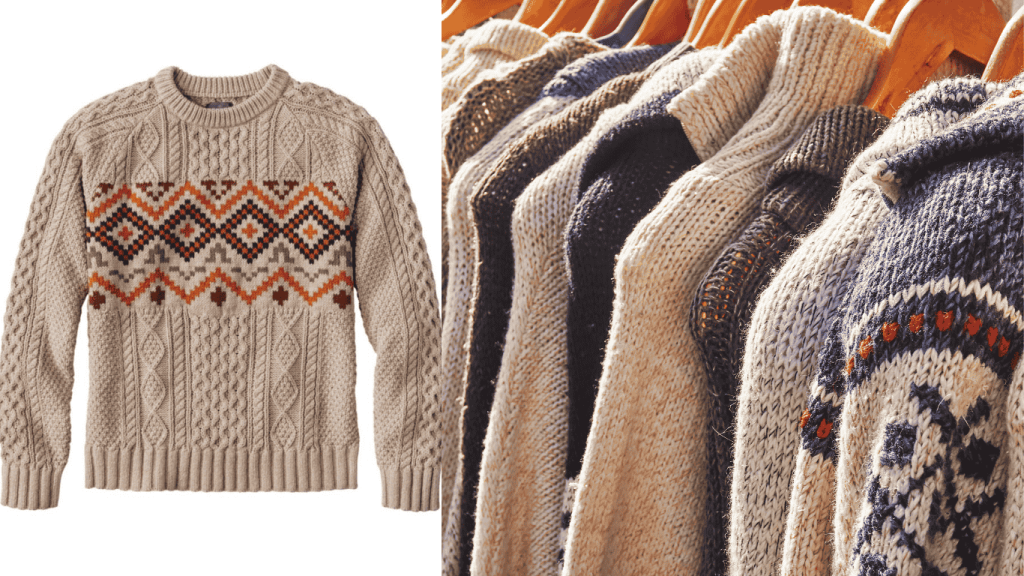
Fair Isle Pullover Sweaters: Fashion is a dynamic world that blends tradition with modernity, function with aesthetics, and craftsmanship with innovation. Two timeless wardrobe staples—the Fair Isle pullover sweater and the utility jacket—illustrate this balance beautifully. While these pieces serve distinct purposes, they both offer a rich history and an enduring appeal in contemporary fashion.
Moreover, understanding the fundamental differences between weaving and embroidery enhances our appreciation for the craftsmanship behind rich clothing. In this article, we will explore the Fair Isle pullover sweater, explain the difference between weaving and embroidery, define the utility jacket, and delve into what makes clothing “rich.”
The Charm of the Fair Isle Pullover Sweaters
The Fair Isle pullover sweater is a staple of classic knitwear, instantly recognizable for its intricate, multicolored patterns. Originating from Fair Isle, a small island in Scotland’s Shetland archipelago, this knitting technique has been celebrated for centuries. Traditionally hand-knitted with fine wool, Fair Isle sweaters feature symmetrical geometric designs, often incorporating shades of blue, red, white, and brown.
Fair Isle pullover sweaters gained widespread popularity in the early 20th century when the British royal family, particularly Prince Edward VIII, was seen sporting one. Today, they remain a timeless fashion choice, seamlessly blending with both casual and semi-formal outfits. They are perfect for layering in the colder months, adding warmth and style to any wardrobe.

Weaving vs. Embroidery: Understanding the Difference
To truly appreciate rich clothes and fine textiles, one must understand the distinction between weaving and embroidery—two essential fabric embellishment techniques with distinct purposes and histories.
What is Weaving?
Weaving is the process of interlacing two sets of yarn—warp (vertical threads) and weft (horizontal threads)—to create fabric. This technique has been used for centuries, dating back to ancient civilizations such as Egypt and Mesopotamia. Weaving produces durable textiles, which form the base for garments, upholstery, and accessories. Fabrics such as wool, cotton, silk, and synthetic fibers can be woven into various textures and densities. Some of the most famous woven fabrics include tweed, denim, and jacquard.
What is Embroidery?
Embroidery, on the other hand, is an embellishment technique rather than a fabric creation method. It involves stitching decorative designs onto fabric using thread, beads, sequins, or even metallic materials. Unlike weaving, which constructs the material itself, embroidery enhances an already woven fabric with intricate details. Embroidery has been a mark of opulence and artistry in clothing for centuries, from the elaborate robes of royalty to the ornate patterns found in high-fashion couture pieces.
In summary, while weaving forms the base of a textile, embroidery serves as a decorative addition, elevating the richness and visual appeal of garments.

The Utility Jacket: A Functional Fashion Icon
The utility jacket, often synonymous with military and workwear aesthetics, is another essential piece in contemporary fashion. Originally designed for soldiers and laborers, utility jackets are characterized by their practical design, sturdy materials, and multiple pockets. They are typically made from durable fabrics like cotton canvas or twill and come in neutral shades such as olive green, beige, and navy.
Utility jackets gained mainstream fashion appeal in the mid-20th century, evolving from purely functional outerwear to a stylish layering piece. Today, they are widely worn as part of casual and streetwear ensembles, offering versatility and an effortlessly cool aesthetic. Whether paired with jeans and a t-shirt or layered over a sweater for extra warmth, a utility jacket remains a must-have item in any wardrobe.
What Defines “Rich Clothes”?
The term “rich clothes” often evokes images of luxury fabrics, impeccable craftsmanship, and exclusive designs. However, richness in clothing is not solely about high price tags; it is also about quality, detail, and timeless appeal. Several factors contribute to making clothes feel rich and luxurious:
- Fabric Quality: Premium materials like cashmere, silk, and fine wool enhance the overall feel and longevity of a garment.
- Craftsmanship: Intricate weaving, precise embroidery, and hand-finished details reflect superior artistry.
- Design and Fit: A well-structured silhouette and thoughtful design elements add sophistication.
- Heritage and Brand Legacy: Clothing from brands with a long history of excellence often carries a sense of prestige.
- Attention to Detail: Elements such as fine stitching, unique patterns, and custom embellishments contribute to a garment’s richness.

Fair Isle pullover sweaters and utility jackets, when crafted with high-quality materials and attention to detail, can certainly fall under the category of rich clothing. A well-knitted sweater using premium wool or a well-structured jacket made from superior fabric showcases the elegance of fine craftsmanship.
Summing up
Fashion is more than just clothing—it is a reflection of history, craftsmanship, and personal style. The Fair Isle pullover sweater and the utility jacket both represent enduring fashion trends that balance style and function. Understanding the differences between weaving and embroidery deepens our appreciation for textile artistry,
while recognizing what makes clothing “rich” allows us to make more informed and intentional fashion choices. Whether opting for a cozy, patterned sweater or a rugged, utilitarian jacket, investing in well-made garments ensures timeless style and durability. By choosing quality over quantity, we embrace a wardrobe that exudes richness, sophistication, and individuality.